
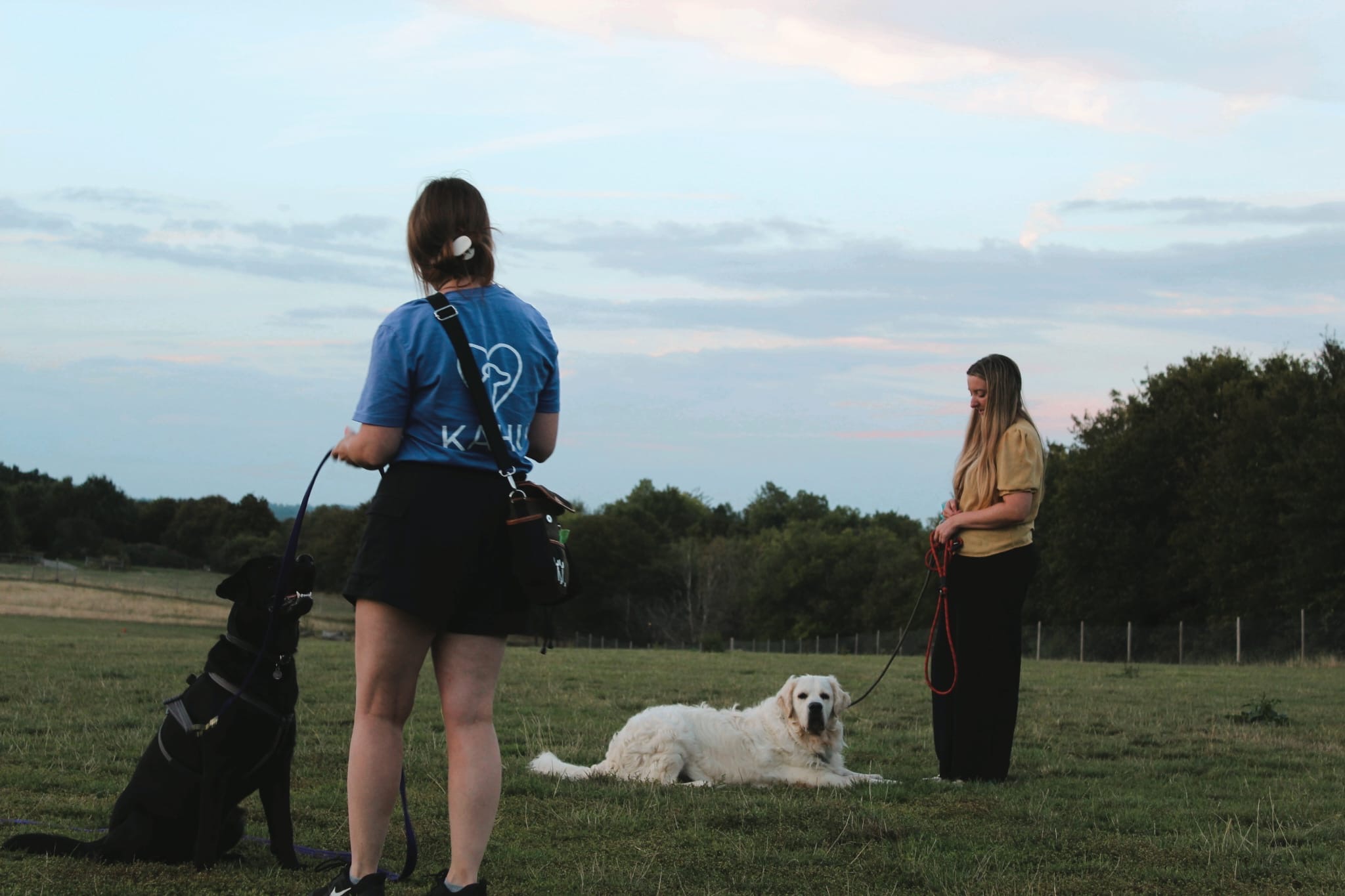
Being a Kahu is about doing the right thing — even when no one is watching
It’s easy to be compassionate when people are watching.
It’s easy to speak gently. To give your dog time. To show patience, offer choice and respect what they’re communicating when everything is going well.
But what about when no one is watching?
When it’s just you and your dog.
When you’re late for work and they’ve stopped to sniff the same patch of grass for what feels like the hundredth time.
When the recall you thought you’d cracked suddenly disappears.
When they bark at the dog across the road.
When they won’t settle.
When you’ve asked for something three times and they still don’t seem to understand.
When you’re tired, stressed, embarrassed or simply having a bad day.
That’s when being a Kahu really matters.
What does it mean to be a Kahu?
Kahu is a Hawaiian word associated with being a guardian, caretaker or protector.
For me, that means more than simply being responsible for a dog. It’s about recognising the responsibility we have for the way they experience the world — and the way they experience us.
Our dogs have very little control over their lives.
We decide when they eat. When they walk. Where they go. Who they meet. When they can stop. When they need to move on. What behaviours are acceptable. What environments we place them in.
That gives us an enormous amount of power.
Being a Kahu is about choosing to use that power with compassion.
Compassion isn't something we only practise when things are going well
Force-free training is sometimes reduced to a conversation about equipment or training methods.
But for me, it goes much deeper than that.
It’s a way of seeing the dog in front of you.
Instead of “Why are you being difficult?”, we can ask:
“What are you finding difficult?”
Instead of “You know this.”, we can wonder:
“What about this situation is making it harder today?”
Instead of immediately trying to stop a behaviour, we can become curious about what that behaviour is communicating.
Because behaviour is information.
A dog who can't respond isn't necessarily choosing not to. A dog who is barking, pulling, freezing, lunging or struggling to settle may be telling us that something about the situation is simply too much right now.
Compassion asks us to listen.
And yes, sometimes you'll get frustrated
Being compassionate doesn't mean being endlessly patient, perfectly regulated or never finding your dog frustrating.
We're human.
There will be mornings when you're running late. Walks when everything seems to go wrong. Days when your own nervous system has very little left to give.
Being a Kahu isn't about perfection.
It's about what you choose to do with those feelings.
Your frustration doesn't have to become your dog's punishment.
You can stop. Reset. Make the situation easier. Go home. Scatter some treats in the grass. Give your dog more distance. Decide that today isn't the day to practise that particular thing.
Sometimes the kindest training decision is simply recognising that neither of you is in the right place to learn.
Your dog knows the version of you that nobody else sees
This is perhaps the part that matters most to me.
Our relationship with our dogs isn't built during the moments we post online.
It's built in thousands of tiny, ordinary interactions that nobody will ever see.
How you respond when they make a mistake.
Whether you listen when they're uncomfortable.
Whether they are allowed to say no.
Whether you notice when they're overwhelmed.
Whether home feels safe.
Whether your hands mean comfort rather than correction.
Whether, when the world feels difficult, they know they can turn towards you rather than away from you.
Those moments may never make it onto Instagram.
Nobody will congratulate you for them.
There may be no trainer standing beside you telling you that you handled something beautifully.
But your dog experiences every single one.
And those experiences become your relationship.
Do the right thing, even when no one is watching
To me, that's what being a Kahu is about.
Not being a perfect dog guardian.
Not having the most obedient dog.
Not never feeling frustrated.
It's choosing compassion when correction would be easier.
Curiosity when frustration appears first.
Giving space when you could force compliance.
Remembering that the dog beside you is a sentient being navigating a human world they didn't design.
And choosing, again and again, to be the person who makes that world feel a little safer.
Even when nobody sees it.
Especially when nobody sees it.
Be their guardian. Be their safe place. Be their Kahu.